Climate reporting driving action.
Turn climate pressure
into leverage.
Reporting mandates, Scope 3 demands, decarbonisation targets – Lever turns that pressure into a costed plan you can act on, with the engineering support to deliver it. And as more companies join, the leverage compounds.
The gap most tools leave
A compliant sustainability report doesn't decarbonise anything.
The mandate sets a deadline and a budget, so the report gets written – usually extrapolated from spend, by advisors who leave once it's filed. You're left with a number, not a plan.
And the projects that would move that number are expensive, and risky to go first on. The hard part was never the report. It's knowing what to do next – and not doing it alone.
The tool, live today
Lever Decarb – from bills to a plan you can act on.
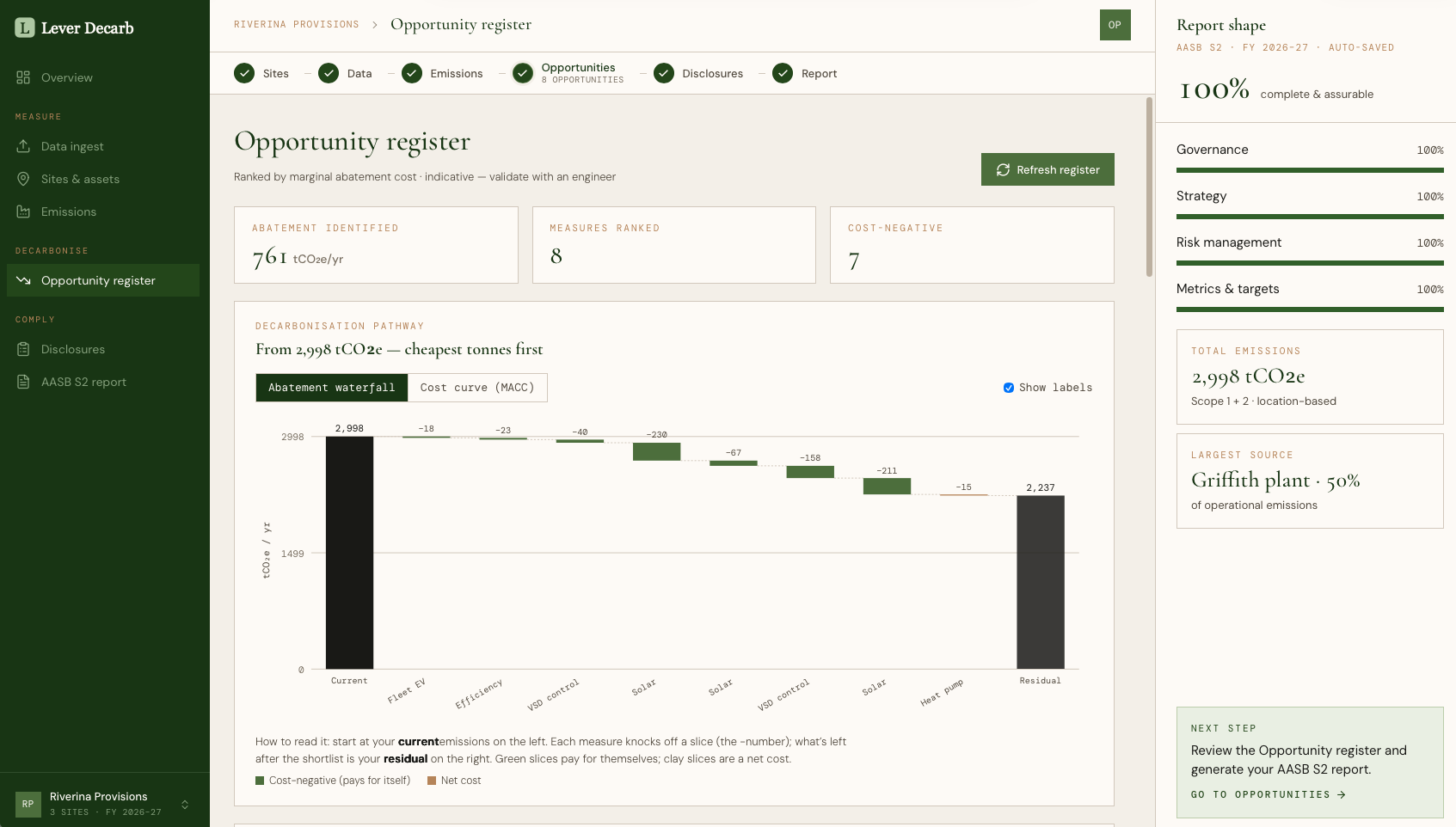
Upload your bills. Lever builds a traceable emissions inventory from your actual energy use – not from spend – maps your major equipment, and ranks the projects that move your numbers by payback and abatement. The result: an AASB S2 sustainability report that's audit-ready by construction, and a costed climate change action plan we can help you deliver.
Grounded in reality
Emissions from metered, plant-floor data, traceable to source for assurance – not estimated from invoices.
Report → projects
Your inventory becomes a ranked list of abatement projects worth doing, each costed by payback and tonnes.
A path to done
The plan doesn't stop on the page – our engineering and project-management support helps you deliver the projects that stack up.
Why “Institute”
Every report makes the next company's transition easier – including yours.
Lever Institute is for-purpose, not a vendor looking to lock you in. As reporters join, the picture sharpens for everyone: benchmark against your sector, see which projects are paying off for peers, and – over time – take on the expensive bets together, so no one carries first-mover risk alone.
Your data stays yours. You choose what feeds the collective, and you get its intelligence back. That's the lever: individual effort, multiplied.
We're early. The tool works today; the collective is what we're building – and contributors shape it. Read the bigger mission →
Who's behind it
Built by someone who's been on the plant floor.
Founder
Luke Sasse has spent his career across mining and manufacturing – technical, sales, and leadership roles – seeing first-hand where industry gets stuck on the path to cleaner operations. An engineer and project leader, he brings the capability to help industry not just plan the transition, but deliver it.
For-purpose. Early stage – more coming.
Request a walkthrough
See it on your own numbers.
An ASRS deadline bearing down, a supplier asking for your Scope 3 data, or just curious what your bills reveal – we'll walk you through Lever Decarb on your own numbers.
We reply to every message personally, within a few days.